
Start at the End: Writing for the Web With the Inverted Pyramid
Readers move fast online. They scan, skim, and filter website content at speed. If they don’t quickly see what they’re looking for, they move on. That’s why effective web writing starts at the end.
The inverted pyramid is a writing structure that puts the most important, useful, and relevant information at the top of the page — where impatient, goal-oriented readers can find it immediately.
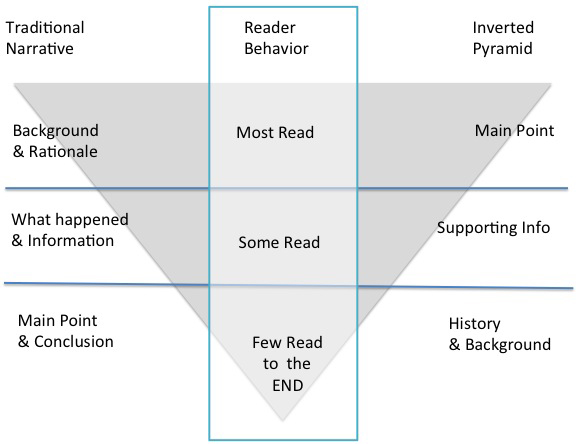
Traditional narrative writing vs. web writing
In traditional academic or narrative writing, the structure usually looks like this:
- Background and context
- Supporting detail and explanation
- Conclusion or “punch line” at the end
This approach assumes a patient reader willing to follow the argument through. Online readers don’t behave that way.
How people actually read on the web
Research and observation consistently show that:
- Most readers scan the top of the page
- Some will scroll for more detail
- Only a small percentage read every word
Web writing has to respect this reality.
Why the inverted pyramid works
With the inverted pyramid, the writer front-loads the most important information. The key message appears first, followed by supporting details in descending order of importance.
In practice, that means:
- Delivering the conclusion up front
- Answering the core question immediately
- Placing background, history, and secondary detail later in the page
Readers who only skim still get value and those who want depth can keep going.
A structure borrowed from journalism
The inverted pyramid isn’t a digital invention. Print and broadcast journalists have used it for decades to communicate essential information quickly — especially in breaking news.
The approach dates back to the American Civil War, when telegraph transmissions were expensive and unreliable. Journalists learned to lead with the five Ws — who, what, why, where and how — so the most important facts were delivered first. That discipline translates perfectly to the web.
Why this matters now
Writing this way doesn’t just help human readers. It also:
- Improves clarity for search engines and AI-powered summaries
- Makes content easier to scan, quote and reference
- Increases the chance your key message is actually seen
If your most important point is buried at the end of the page, many readers — human and machine — will never reach it.
The takeaway
When you write for the web, resist the urge to build slowly toward a conclusion. Start with what matters most. Then let the rest support it.